How PDO threads lift sagging skin and stimulate collagen, the different types of thread, and what recovery looks like.

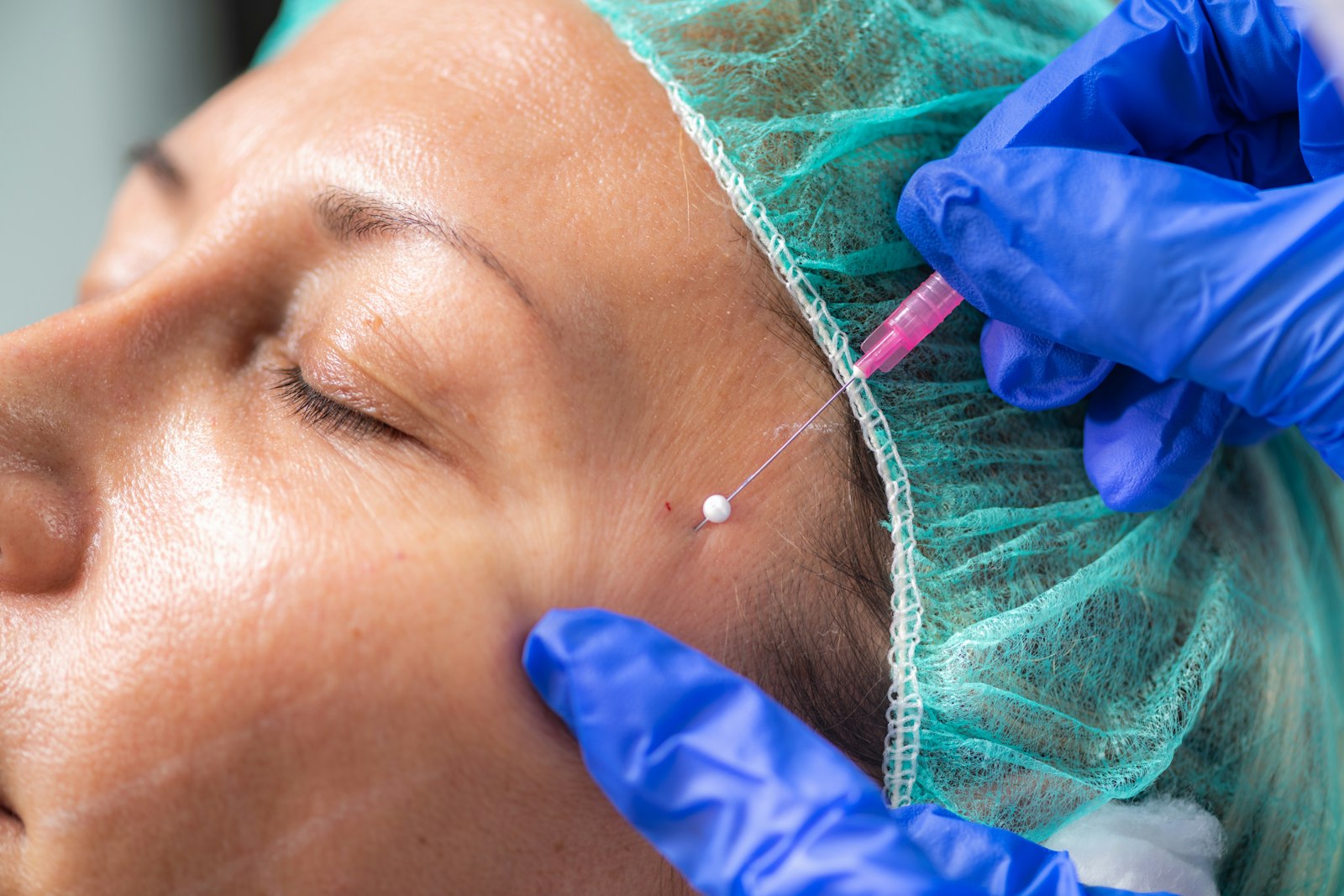
As we age, the skin loses collagen and elasticity, and areas like the jawline, jowls, cheeks and brows can start to sag. A PDO thread lift offers a way to lift and tighten these areas without surgery.
What are PDO threads?
PDO stands for polydioxanone, a dissolvable material that has been used safely in surgical stitches for decades. Fine PDO threads are placed just beneath the skin, where they lift and support the tissues. Over around six months the threads gradually dissolve, stimulating your skin to produce new collagen as they do.
The different types of thread
- Cog (barbed) threads have tiny barbs that grip the tissue to lift and reposition areas such as the jowls, cheeks and brows
- Mono (smooth) threads improve skin quality, firmness and fine lines
- Screw (twist) threads add support and volume to hollow areas
Most treatments use a combination tailored to your face.
What happens during treatment?
After a consultation, the entry points and lifting directions are carefully marked and a local anaesthetic is applied. The threads are inserted with a fine needle or cannula, then gently lifted into position. Treatment usually takes 30 to 60 minutes and you will see an immediate lift.
Recovery and results
Mild swelling, bruising and tenderness are common for a few days, and most people return to work within one to two days. For two weeks, avoid exaggerated facial expressions, sleeping on your face, facial massage, dental treatment, saunas and strenuous exercise. Results typically last 12 to 18 months, as the collagen your skin produces remains after the threads have dissolved.
Is a thread lift right for me?
PDO threads work best for mild to moderate skin laxity. For significant sagging, a surgical facelift may give a better result, and we will always tell you honestly at your consultation.
To find out more, call us on 020 7018 7850.
Book an Appointment
It’s easy and free!
Tags:facePDO threads